Upwork Alternatives in 2026: 6 Platforms Compared for Hiring Developers

Let’s say you posted a developer role on Upwork three days ago, and now you have 47 proposals open in a browser tab. You’ve read maybe six of them: half are templated, and two quoted rates that seem too good to be true. One is clearly an agency reselling someone. And you still do not have a developer, and the sprint you were hoping to staff started next week.
The thing is, Upwork still handles millions of engagements a year. The question is whether it is the right tool for your hire, and if not, what to use instead.
This guide compares six of the strongest Upwork alternatives on the criteria that decide a hire: how they vet talent, what they really cost, how much of the screening you have to do yourself, and what happens when something goes wrong.
The 6 best Upwork alternatives at a glance
| Platform | Best for | Vetting | Time investment | Cost signal |
|---|---|---|---|---|
| Lemon.io | Startups & SMBs hiring vetted senior developers | Rigorous — 4-stage human review + live tech interview | Low — 1–3 curated matches, often within 24–48h | ~$55–$90/hr, transparent, no bidding |
| Toptal | Enterprise budgets, complex long-term work | Rigorous — top ~3%, live coding & test project | Low — platform matches 1–2 finalists | ~$120–$220+/hr, premium markup |
| Fiverr | Design, media, fixed-scope creative gigs | Basic — portfolio-based | Medium — search-heavy | Fixed-price; 20% seller / 5.5% buyer fee |
| Guru | Flexible payment terms, long-term simple work | Minimal — ID verification only | High — manual filtering | Low platform fees (~3%) |
| Contra | Commission-free independent hiring | Light — profile & portfolio | Medium — you source | 0% commission |
| Dedicated team (agency) | Owning product delivery end-to-end | Agency-employed, salaried engineers | Lowest — the vendor manages the team | Higher rate, lower total risk |
The rest of this guide unpacks each option — what it does well, where it breaks down, and who should pick it.
1. Lemon.io — vetted senior developers, fast
Lemon.io is a curated marketplace for senior remote developers, designed to solve the exact problem Upwork handles worst: matching you with a strong engineer who fits your stack — fast, without the hassle of running a hiring funnel.
Every candidate in Lemon.io’s pool undergoes a rigorous multi-stage review — including background checks, technical assessments, test assignments, and a live interview with a senior engineer. Only about 1% pass. English fluency, identity, and work history are all manually verified, yielding a network of proven seniors.
By contrast, Upwork has no skills gate; any contractor can bid, leaving the entire vetting burden on you.
Speed is another key advantage of Lemon.io. Once you describe the role, the team delivers one to three matched candidates within 24–48 hours. The proof: most clients hire the first developer they’re introduced to.
You can also self-browse the network and filter by stack. Also, if a candidate doesn’t work out, a 48-hour free replacement guarantee ensures you never have to start over from scratch.
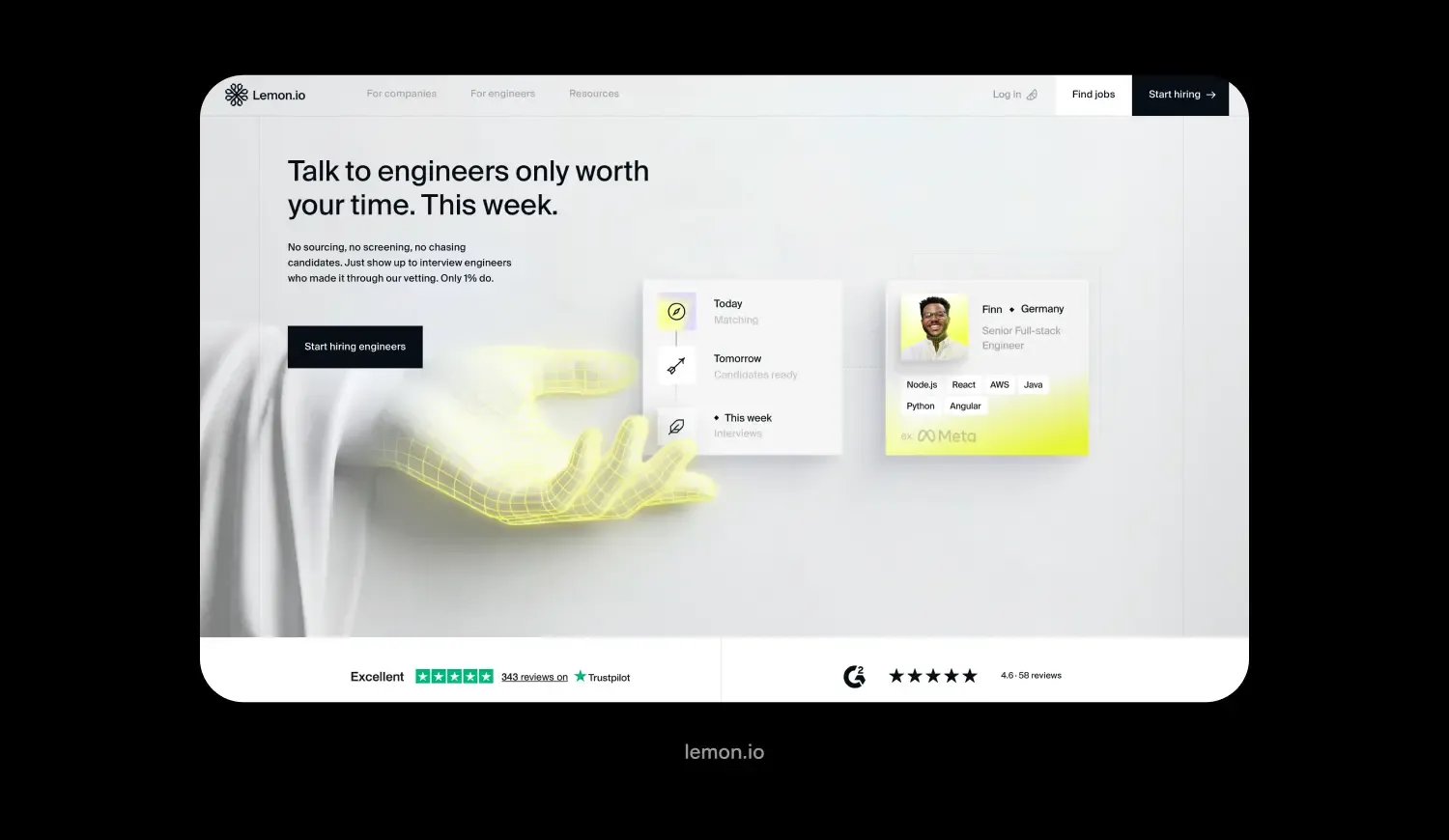
Source: Lemon.io website
Choose Lemon.io if you are a startup or SMB that needs a pre-vetted senior developer fast, wants upfront rate transparency, and would rather spend zero hours screening proposals.
2. Toptal — enterprise budget, requirements, and speed
Toptal is the other name that comes up most often alongside Lemon.io for serious development hiring. It advertises acceptance of only the top ~3% of applicants through an intensive screen, and its network spans developers, designers, and project managers across many industries.
The differences are in positioning and price. Toptal aims squarely at enterprise clients and long-term engagements, with senior developer rates commonly running $120–$220+/hour — a range that reflects a heavy platform markup. If you have the budget, a complex mandate, and need proven senior talent in a couple of weeks, Toptal delivers.
Against Upwork, Toptal removes the quality lottery entirely; against Lemon.io, it costs more and gives you higher pricing and less direct visibility into the pool.
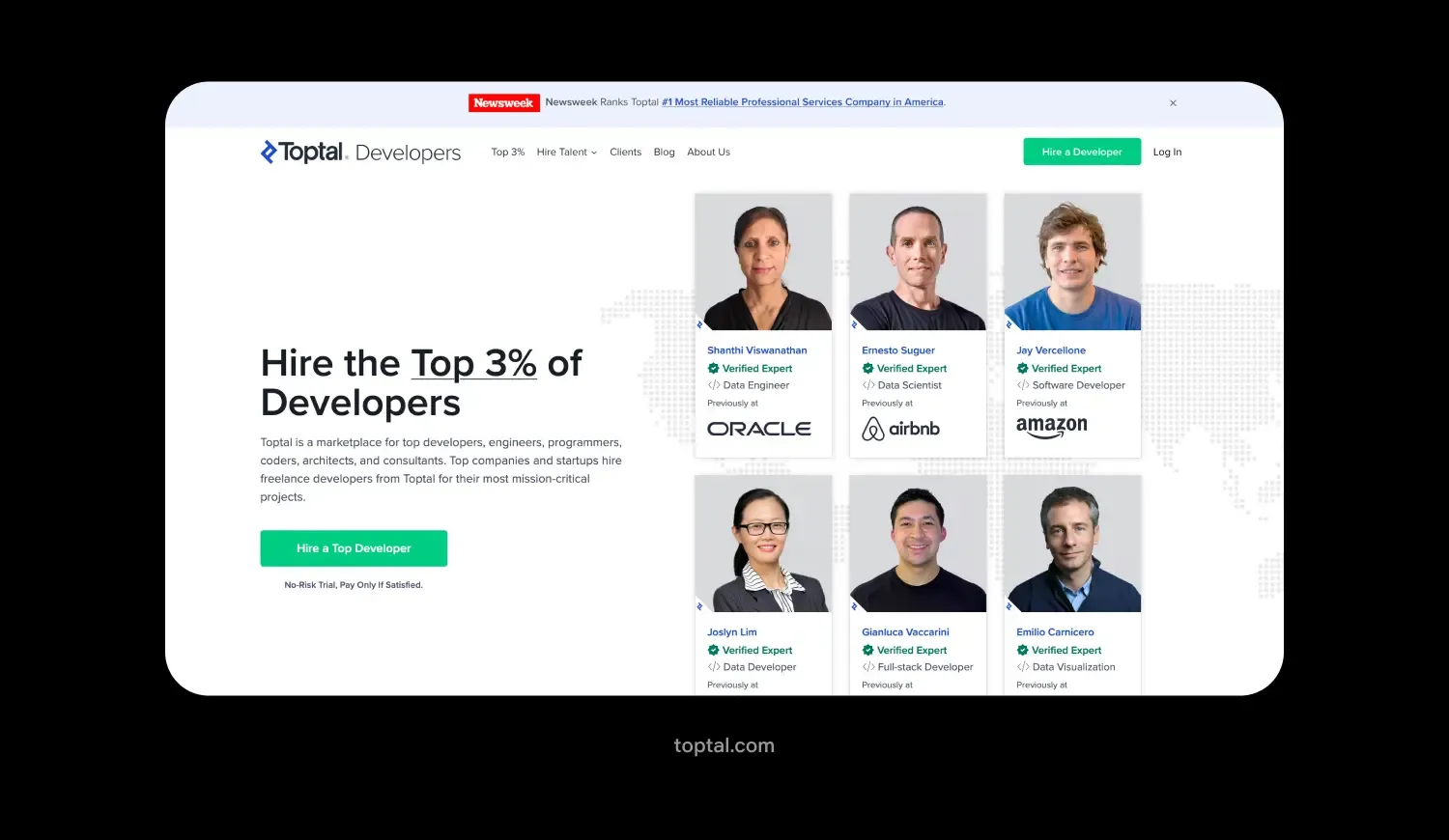
Source: Toptal website
Choose Toptal if you are an enterprise or well-funded team that values a heavily curated, hands-off enterprise-DNA match and treats rate as secondary to certainty.
3. Fiverr — design, SEO, media edits, and fixed-scope gigs
Fiverr makes taking on quick creative projects effortlessly smooth. Instead of dealing with endless bidding wars, sellers list packaged services at flat rates — like logo design, video editing, or quick copywriting. You simply pick what you need, order, and move on.
The trade-off for all that convenience comes down to the fee structure. Fiverr takes a flat 20% cut from sellers on every order, while buyers pay an extra 5.5% service fee plus small-order charges. Once you factor in currency conversion and withdrawal fees, the platform’s take rate usually lands between 24% and 35% — significantly higher than Upwork’s average cut.
Where Fiverr truly shines is in bite-sized digital work. Graphic design, media production, and quick SEO tasks thrive in this fixed-price setup where comparing options and tracking revisions is straightforward. However, it’s far less reliable for software and web development.
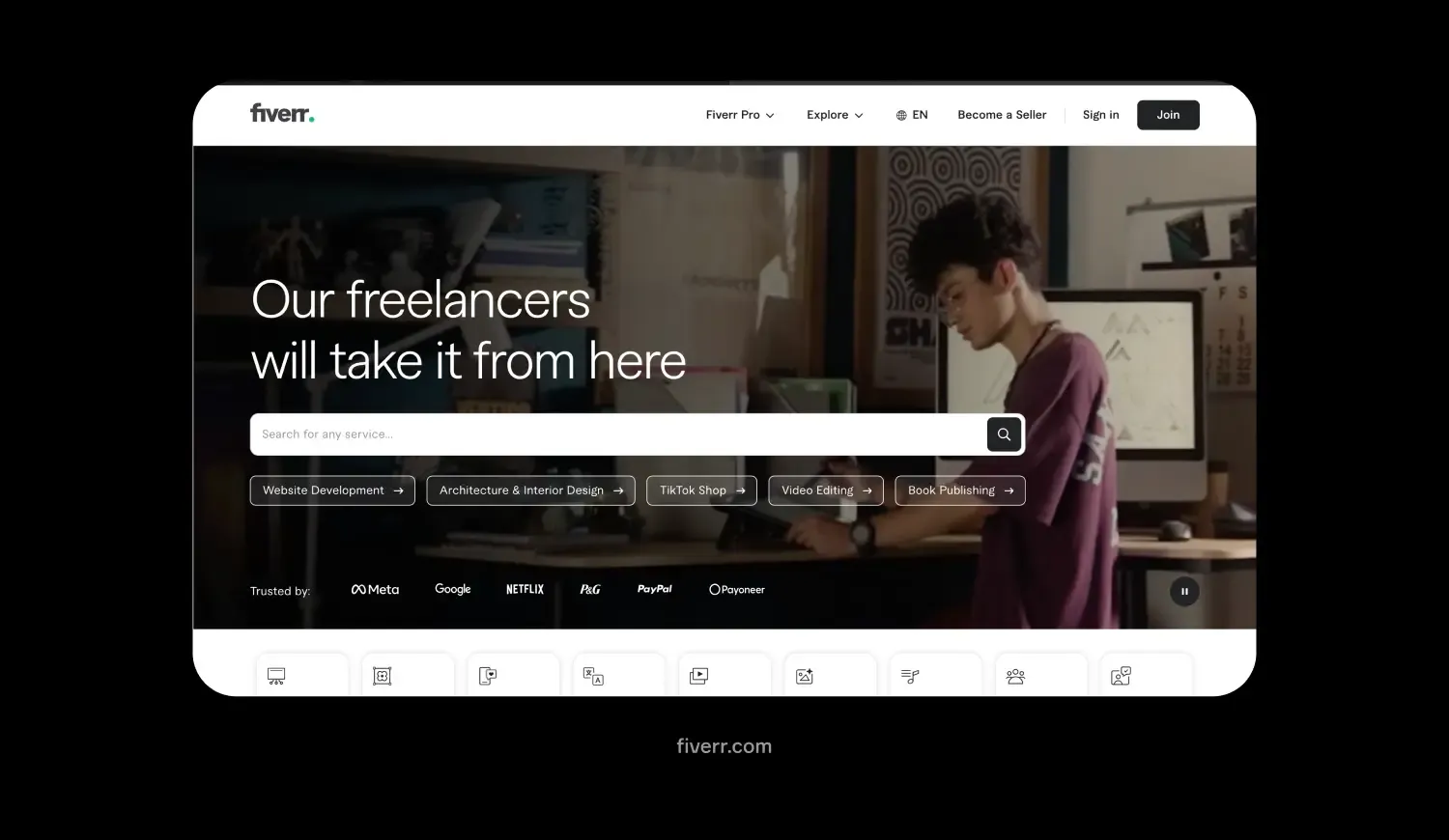
Source: Fiverr website
Choose Fiverr if you need design, media, or short creative deliverables with a clear scope. For sustained engineering work, look to Lemon.io instead.
4. Guru — flexible payments, weak for development tasks
Guru has been connecting companies with freelance developers, designers, and marketers since 1998. For hiring managers looking to stretch a budget, it offers two big perks: highly flexible contracts — including fixed-price, hourly, or recurring retainers — and an employer fee of just 2.9%, which you can even waive by paying via eCheck or wire.
You also get integrated WorkRooms for team collaboration and SafePay, an escrow tool that holds project funds until deliverables are approved.
However, saving money comes with extra homework. Guru lacks a pre-vetting process, putting the full screening burden directly on your shoulders. Worse, freelancers can actually pay a fee to delete negative reviews from their profiles, making talent ratings much less reliable than on competing platforms.
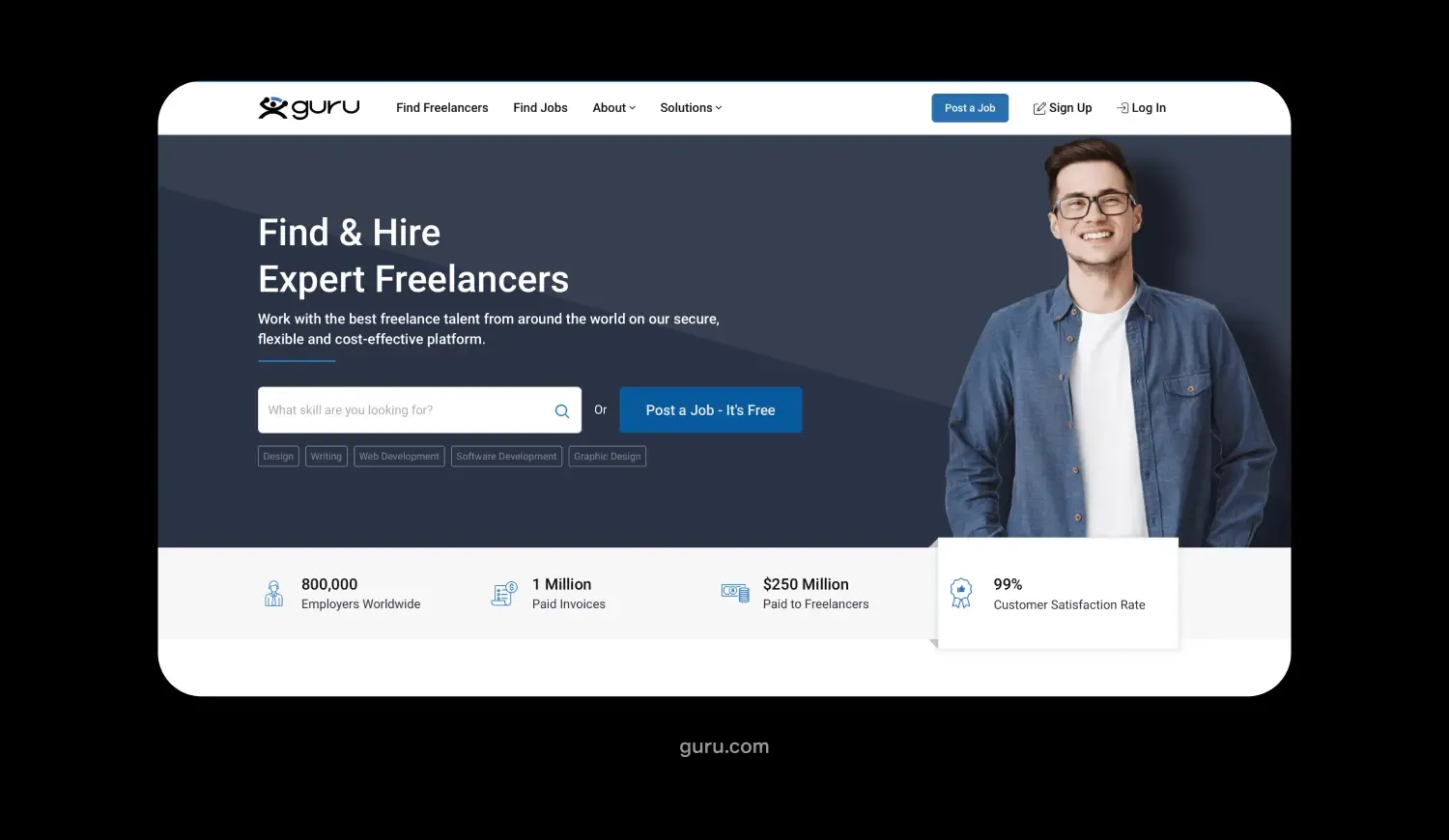
Source: Guru website
Choose Guru if you want flexible payment terms across a broad range of services for relatively simple, ongoing work. For development quality specifically, it is a fallback, not a first stop.
5. Contra — commission-free for independents
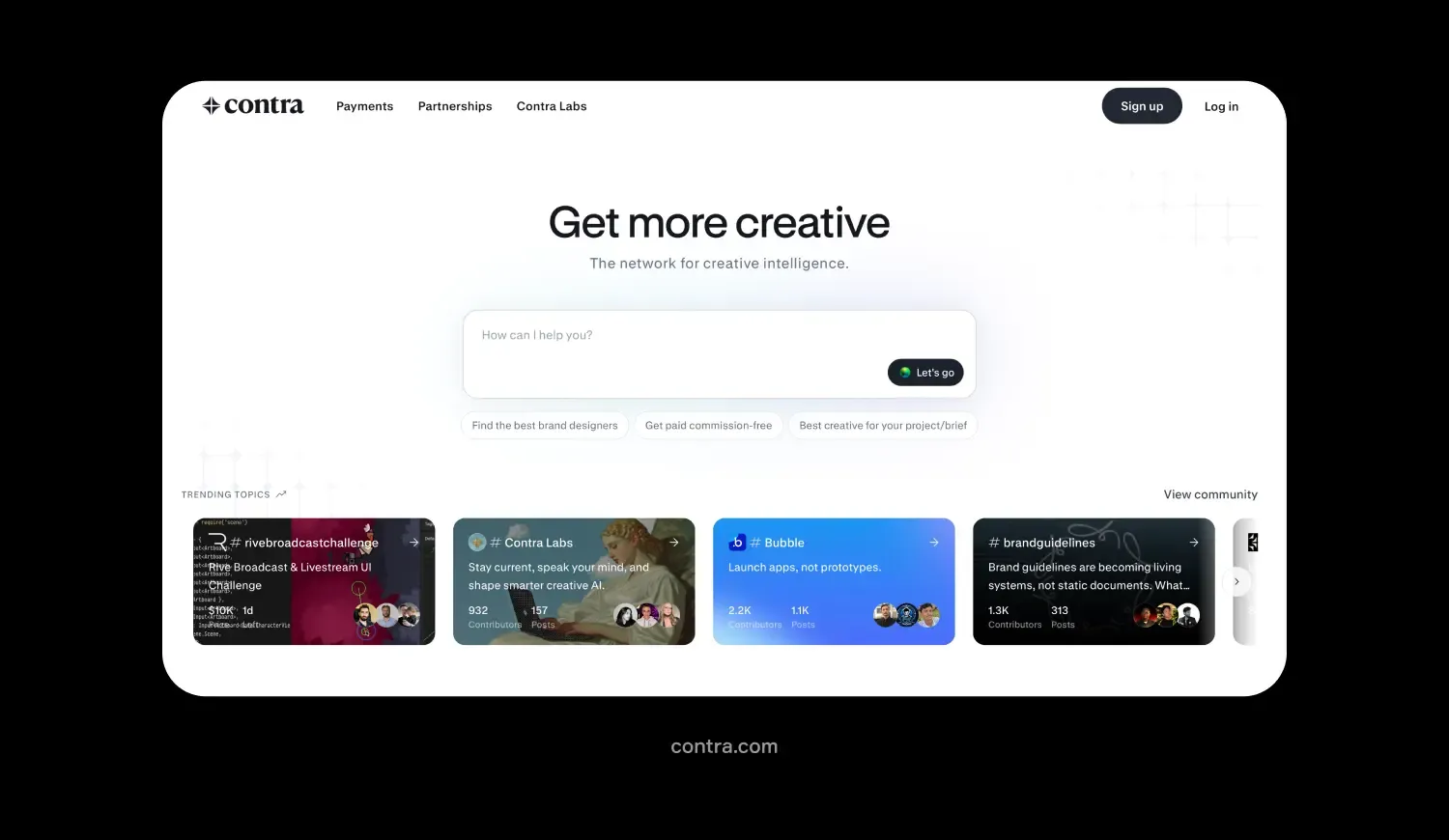
Contra has grown as a “commission-free” marketplace: it charges neither the freelancer nor, in most cases, the client a platform commission, positioning itself around independent professionals and direct relationships. For freelancers, the 0% take rate is the headline; for clients, it means the rate you agree is closer to the rate you pay.
The trade-off is the flip side of Upwork’s problem: vetting is light and portfolio-based, and sourcing is largely on you. There is no rigorous technical gate, so Contra rewards clients who already know how to evaluate engineers and want to avoid platform fees more than those who want the platform to do the screening.
Source: Contra website
Choose Contra if you are comfortable sourcing and vetting on your own and want to keep platform fees out of the equation.
6. A dedicated development team — when you need delivery, not a freelancer
Every platform above solves the staffing problem. They connect you to individuals you then have to manage, coordinate, and hold accountable.
That is right when you need a specific pair of hands for a defined slice of work. It is the wrong tool when what you need is for a product to get built — with architecture decisions owned, QA in place, DevOps handled, and someone other than you accountable for the roadmap.
At that point, you are not looking for a freelancer at all; you are looking for a team.
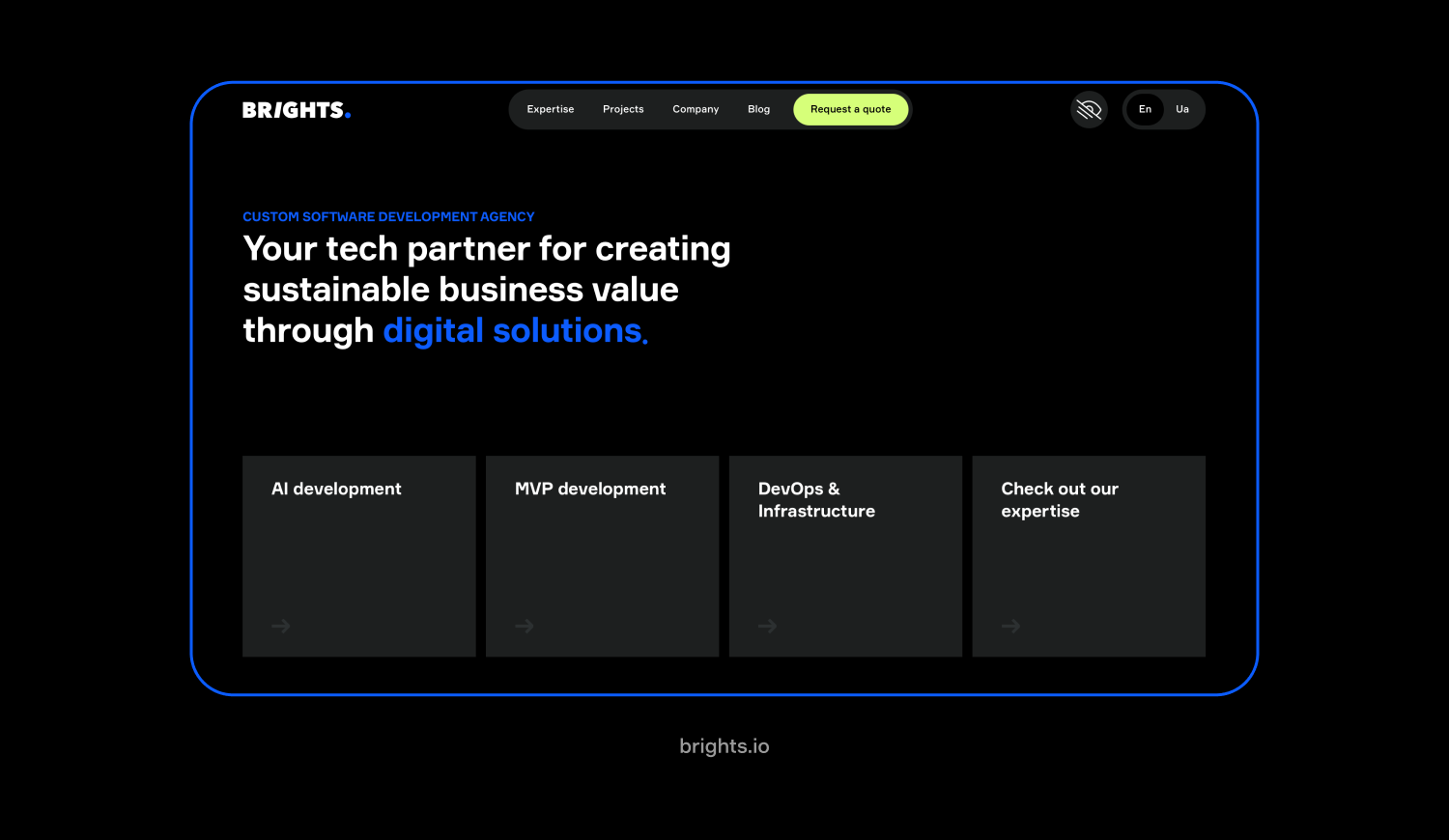
A dedicated development team is a group of engineers that a vendor assembles to work exclusively on your project, long-term, effectively as your own staff — but with the vendor handling recruitment, coordination, and delivery.
Compared with stitching together freelancers, you trade a lower hourly rate for a lower total production risk.
Source: Brights website
Choose a dedicated team like Brights if you would rather own the outcome than manage the people who produce it.
Which Upwork alternative fits your situation
There is no universal winner — the right choice is the one that tracks what you are building.
For software and web development. Lemon.io is the strongest pick for startups and SMBs that need a pre-vetted senior developer fast, with upfront rates and no proposal sorting. Toptal is the enterprise-budget equivalent.
For design, marketing, and communication. Fiverr handles fixed-scope creative work well — just price in the 20% seller fee and buyer-side charges.
For flexible, all-category, or simple ongoing work. Guru and Contra each offer reasonable fee structures, though neither matches the quality assurance of a fully vetted network.
For owning end-to-end product delivery. A full dedicated team is the category shift — you stop hiring people to manage and start hiring an outcome.
If you have been burned by the hiring loop — slow matches, uneven quality, support that feels like shouting into a void — the fix is usually not another bidding platform. It is either a network that vets before you see a name, or a partner that owns delivery outright. Which one depends on whether you are extending your existing team or building a product end-to-end with lower possible risks.
And if it is the latter, that is the gap a custom dev agency fills: not a freelancer you coordinate, but a team that takes the roadmap, the architecture, and the accountability off your plate — so the thing you set out to build gets built.
FAQ.
For most startups and SMBs hiring senior engineers, Lemon.io is the strongest option: it vets developers through a multi-stage human review, returns curated matches within a day or two, and prices transparently with no bidding. Toptal is the better fit for enterprise budgets.
Brights custom dev agency is the right move when you need a whole product delivered rather than individual contractors.

