Infrastructure, cloud and DevOps services
Slow releases, unpredictable cloud costs, and recurring incidents rarely have separate causes. Most of the time, it's the foundation your cloud, infrastructure, and delivery process were built on.
Brights provides cloud and DevOps services spanning architecture, migration, CI/CD, Kubernetes, reliability, cost, and security — delivered as a one-off audit, a scoped project, or an embedded team shaped around your goals.

Ship faster on infrastructure that holds

ISO/IEC 27001
certified
SOC 2 & GDPR
aligned
15 years
in development
5.0
on Clutch
What we can help you with.

Architecture and cloud consulting
For when you are choosing a cloud, or your current setup was never designed, and you can feel it. Architecture review across AWS, Microsoft Azure, and Google Cloud (GCP), a target design, and a path to get there.


Cloud
For moving off on-premise hardware, or off a cloud that no longer fits, without a months-long freeze. Planning, sequencing, and execution that keeps the business running while the workloads move.


DevOps and CI/CD
For when every release is manual, risky, and owned by one person who cannot take a holiday. Continuous integration and continuous delivery (CI/CD) pipelines that make deploys repeatable and boring.

Platform engineering and IaC
For infrastructure that is hand-built and impossible to reproduce. Infrastructure as Code (IaC), commonly with Terraform, so environments are versioned, repeatable, and self-service for your developers.


Kubernetes and containerization
For when you have outgrown what you can run and deploy by hand. Containerization and Kubernetes, the standard for container orchestration, set up so it scales without becoming a second full-time job.


Reliability
For when uptime turns into a business problem the whole company feels. Site Reliability Engineering (SRE), observability, and incident practices that cut how often things break and how long they stay broken.

Security and compliance, DevSecOps
For security that gets bolted on at the end instead of built into the pipeline. DevSecOps puts security checks inside the delivery process, where they catch problems early and slow the team down less.
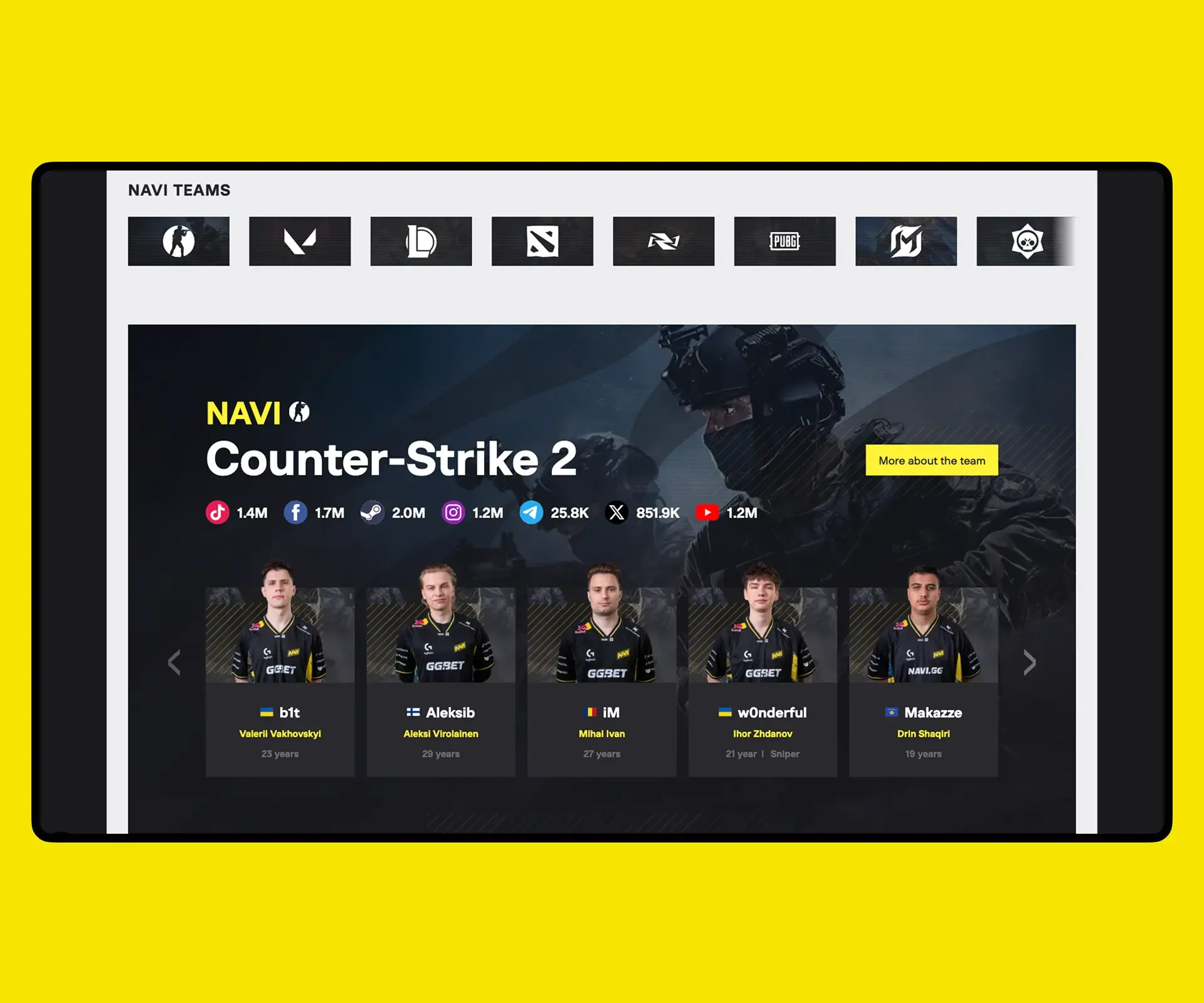

DDoS-resilient infrastructure for peak esports traffic
NAVI, one of the world's top esports organizations, needed a platform that could hold up when millions of fans show up at once, during live match broadcasts and major tournament moments. We built a protection system on Cloudflare to guard against the frequent DDoS attacks esports platforms face, and configured the infrastructure to handle traffic spikes without downtime. The site now supports up to 20M simultaneous requests during peak broadcasting moments.
How our cloud and DevOps process works.
Related work we've delivered.



Why choose Brights.
Brights holds ISO/IEC 27001 certification, and that standard carries into every cloud and DevOps engagement. We map compliance against SOC 2 and GDPR, build DevSecOps into your pipelines from the start, and run continuous vulnerability monitoring as your infrastructure scales.

FAQ.
Cloud migration moves an application to the cloud with minimal changes, often called lift and shift. Modernization re-architects it around cloud-native services, which is closer to cloud application development, for better cost, scalability, and maintainability. This is where DevOps services matter most, since modernized applications need automated pipelines to deploy safely and often. Many projects combine both, migrating some components and modernizing others.
AWS, Azure, and GCP provide the infrastructure but not the delivery practices. Cloud & DevOps services cover how a team builds, tests, and releases software on that infrastructure, including CI/CD, automation, and monitoring. A cloud account alone doesn't make releases fast or reliable. Most teams on a major cloud still benefit, since the cloud supplies the tools while DevOps supplies the process.
DevOps is a set of practices for building and releasing software quickly and reliably. SRE applies engineering discipline and measurable objectives to keep systems reliable in production, including for enterprise workloads at scale. DevOps emphasizes delivery speed and workflow, while SRE emphasizes reliability, error budgets, and incident response. The two overlap and are usually used together rather than chosen between.
A cloud migration can take anywhere from a few weeks to several months, depending on the number of applications, their complexity, and how much re-architecting is required. A straightforward lift and shift of a small system can finish in weeks, while migrating complex cloud solutions with many interconnected applications runs into months. The timeline is set early, during an assessment that maps dependencies and sequences the move.
Cloud costs are reduced through visibility, right-sizing, and governance rather than blanket cuts. The approach starts with finding which resources drive spend, then removing what's unused, and setting policies that keep the environment secure and prevent waste from returning. This is the practice of FinOps. Done well, it lowers the bill while leaving developer workflows and delivery speed untouched.
A one-off project delivers a defined scope and ends, such as a migration or a pipeline build. Managed services provide ongoing operation, monitoring, and support after the build is done. Whether you need a single deliverable or continuous support, cloud and DevOps consulting services can be scoped either way. Many teams start with a project and move to a managed model once the environment is live and needs continuous operation.
Request a quote.
Thanks for scrolling this far. Let's take the next step. Provide us with a brief description of what you are going to build.