Top SaaS Trends Transforming the Market in 2026

The SaaS market doesn't stand still, and keeping up with SaaS trends has become a make-or-break factor for product teams. In 2025, $100.2 billion in venture capital flowed into SaaS products — representing 39% of all global VC investments. That level of capital signals where the market sees opportunity, but it also intensifies competition.
Founders and CTOs face constant challenges: choosing between microservices and monoliths, deciding whether AI integration adds value or complexity, and figuring out if low-code tools actually speed up delivery or create technical debt down the road.
Understanding which SaaS technology trends deliver real impact is primarily about recognizing which shifts in technology and architecture move the needle. This article breaks down tech and market trends in SaaS that matter: AI-powered automation, edge computing, API-first development, stack rationalization, and more.
As a SaaS consulting team and development experts, Brights helps SaaS companies implement these technologies every day, distinguishing between fleeting hype and architectural decisions that will define the industry for years to come.
Key takeaways
AI integration is now the baseline: 100% of SaaS companies founded in 2025 have AI as a core component of their product.
With 97% of organizations reporting AI-related security incidents, zero-trust architectures and end-to-end encryption need to be built in from day one.
Pay-as-you-go, tiered usage, and short-term commitments eliminate waste from unused licenses and scale naturally with customer growth, driving higher retention.
Low-code platforms work for internal tools, dashboards, and simple CRUD operations but can create technical debt for complex algorithms or high-performance features.
Each year, the number of SaaS used by enterprises drops by around 5%: businesses prioritize consolidated platforms while leaving room for focused micro-SaaS products.
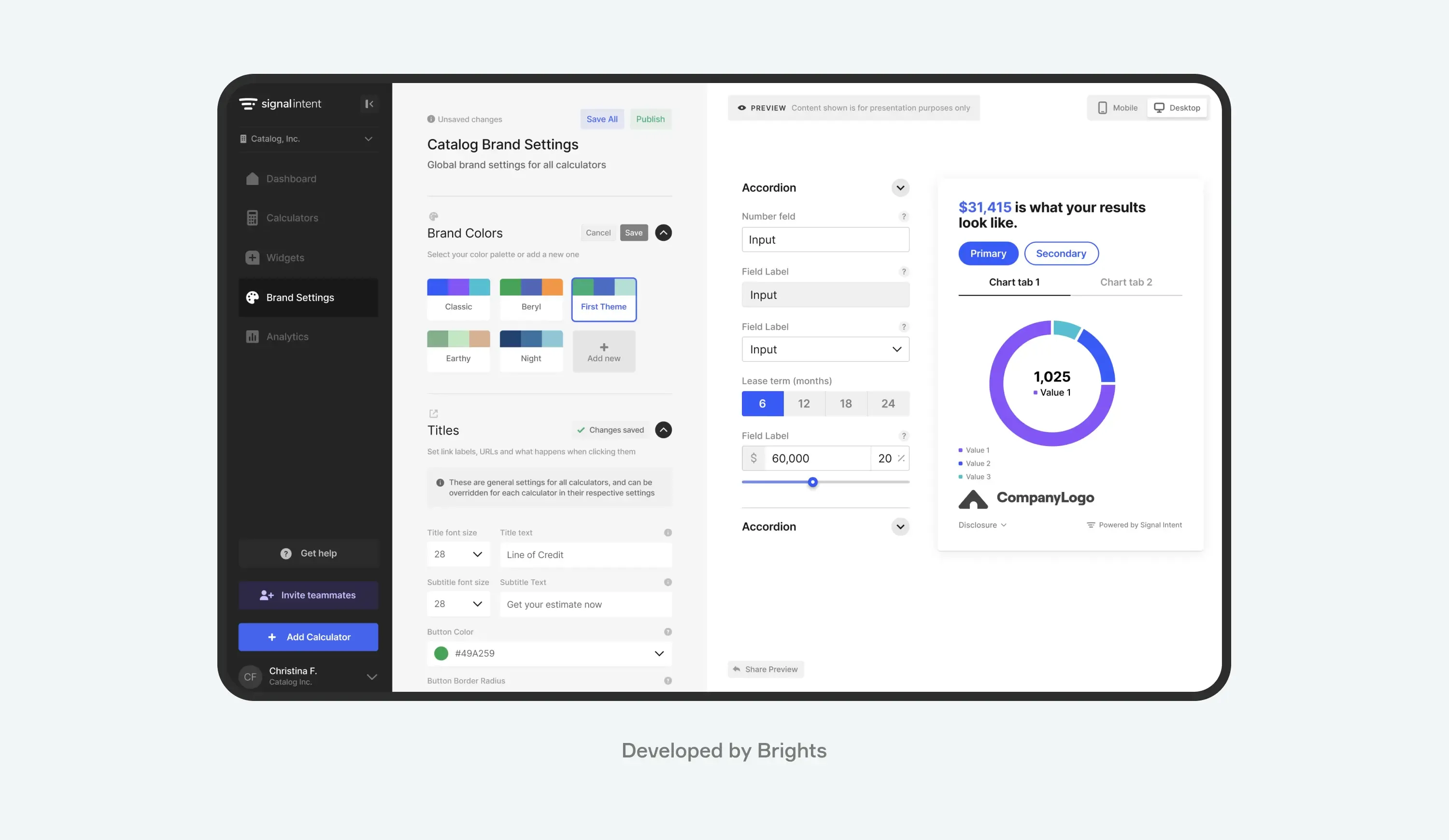
Signal Intent, SaaS platform developed by Brights
What are the key SaaS development trends in 2026?
The SaaS landscape in 2026 is defined by a few critical shifts, some driven by technology maturity, others by changing customer expectations. Here are the SaaS industry trends reshaping how products are built and scaled.
AI and machine learning integration
There’s no doubt artificial intelligence is shaping the future of SaaS. According to HighAlpha's 2025 SaaS benchmarks report, 100% of SaaS companies founded in 2025 name AI as core to their products.

Source: HighAlpha
In the same report, HighAlpha venture firm recommends building AI-native workflows into your core product rather than adding cosmetic features. Here are some more insights:
AI-native workflows drive faster growth despite higher compute costs.
Standardized AI deployment across teams with clear KPIs outperforms endless pilots.
Outcome-based pricing aligns cost with value delivered, not seats sold.
AI compression of repetitive work increases ARR per employee as companies scale.
“Beyond roughly $20 million in ARR, expansion becomes the dominant growth engine. Use AI to drive multi-product adoption, proactive success, and precision upsell — then pair it with efficient acquisition and short CAC payback to sustain momentum and resilience.”
Researching the top SaaS trends in 2026 further, we see that the most effective AI implementations in SaaS focus on automation that eliminates repetitive work. Think customer support chatbots that resolve tier-1 inquiries without human intervention, or predictive analytics that flag churn risk.
Machine learning models are also transforming backend operations. Automated anomaly detection detects security threats and performance issues faster than manual monitoring. The key is to start with high-impact, repeatable tasks — not try to automate everything at once.
Low-code and no-code development platforms
Low-code and no-code tools have matured from prototyping aids into production-grade development environments. No wonder the global low-code platform market is projected to reach around $65 billion by 2027.
The businesses seeing real ROI use low-code strategically, mostly as a complement to custom development. Here's where it works: internal approval workflows, customer onboarding dashboards, data entry forms, and simple CRUD operations that follow predictable patterns.
However, there's a catch: low-code works best for standard business logic. Complex algorithms, high-performance requirements, or highly customized user experiences still need traditional development. The mistake we see teams make is forcing low-code into scenarios where it creates more technical debt than it saves in time.
Here's a test: if you find yourself writing custom scripts to make the low-code platform behave differently, or if you're hitting platform limitations every week, you've chosen the wrong tool.
Platform consolidation and SaaS stack rationalization
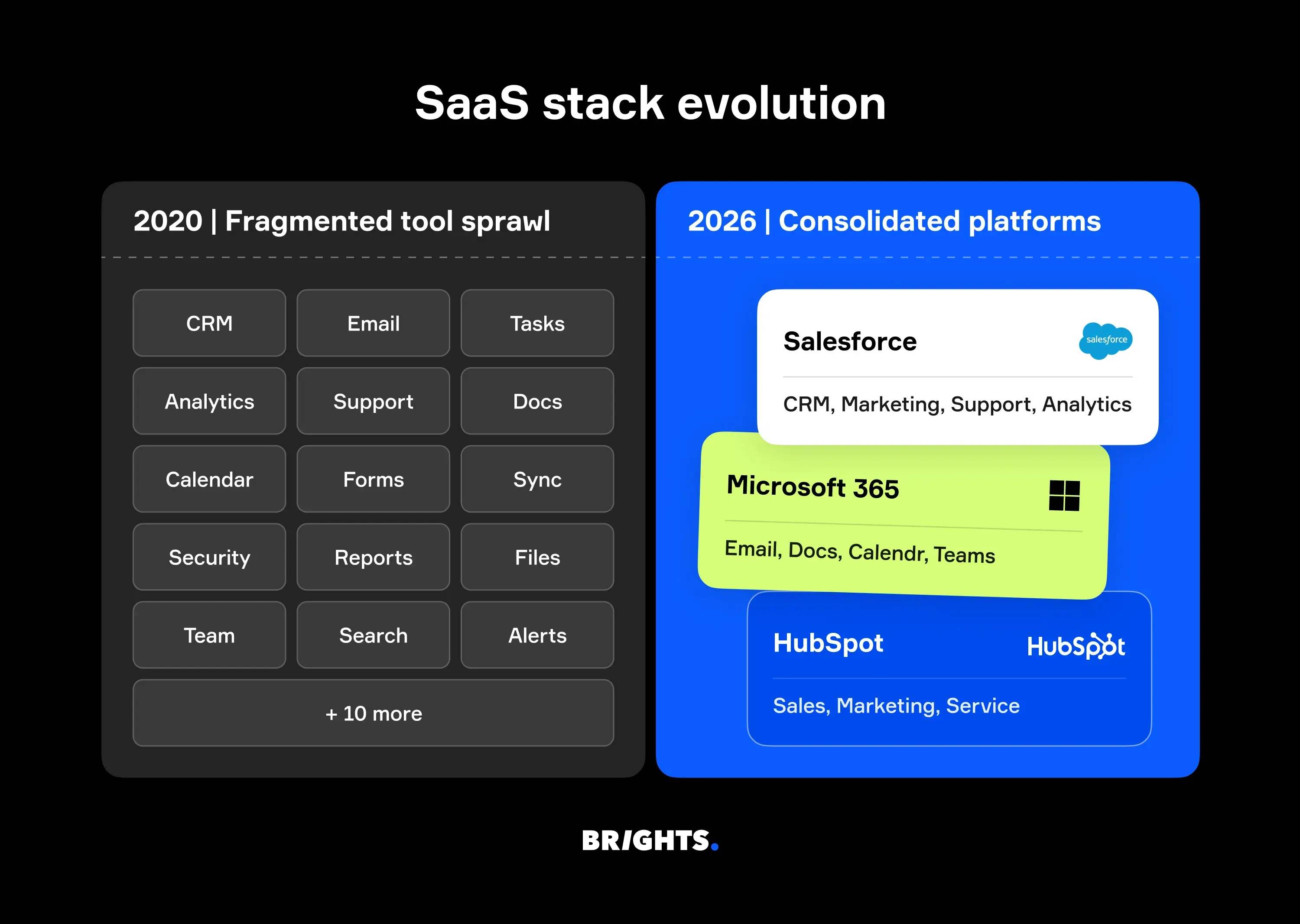
In 2025, the average enterprise used 106 SaaS applications. This seems like a lot, but that number is decreasing by around 5% each year. Сompanies today are pulling back, consolidating overlapping tools, and cutting redundant subscriptions.
CIOs would rather pay for one platform that handles CRM, marketing automation, and customer service than juggle separate subscriptions with fragmented data. This trend benefits the most popular SaaS products: established players like Salesforce, Microsoft, and HubSpot, who can offer broad functionality and acquire smaller vendors to fill capability gaps.
Despite the consolidation and rationalization B2B SaaS trends, there’s also an opposing rise of micro-SaaS, where small providers offer one super-focused feature (often as a plug-in or add-on). Micro SaaS trends in 2026 include AI-native products, hyper-vertical specialization, hybrid pricing models, platform-native distribution strategies, and the matured solo founder tech stack.
Edge computing for performance and scalability
Edge computing is moving processing closer to users, reducing latency and improving performance for global SaaS products. This represents a significant shift in SaaS architecture in cloud computing, where the traditional centralized model gives way to distributed processing.
For SaaS companies, edge computing addresses critical issues related to bandwidth costs, user experience, and reliability. By processing data locally and transmitting only essential information to central servers, edge architecture reduces bandwidth expenses while improving performance for distributed teams.
This SaaS trend especially matters for products serving global customers or operating in regions with inconsistent connectivity. It’s also highly relevant for vertical SaaS serving industries such as manufacturing, healthcare, and retail, where operations can't tolerate latency-induced delays.
API-first development and ecosystem integrations
Modern SaaS products don't operate in isolation. Customers expect seamless integrations with the tools they already use, including CRMs, project management platforms, and communication tools.
Building with an API-first approach means treating your API as a product. This starts with design: define your API contract before writing implementation code, use OpenAPI specifications for consistency, and version everything from day one. Well-documented APIs with clear examples, SDKs in popular languages, and responsive developer support create network effects. Every integration a customer builds becomes a switching cost for competitors.
Usage-based and hybrid pricing models
The traditional per-seat pricing model is giving way to usage-based and hybrid models that align costs with actual consumption. This shift addresses the pain point of customers not willing to pay for seats that may go unused. So, instead of locking users into fixed annual contracts, vendors are offering models like:
Pay-as-you-go, with customers paying only for what they actually use (API calls, storage consumed, or transactions processed);
Tiered usage pricing, where vendors set volume thresholds with different rates at each tier. Higher usage typically lowers per-unit costs, making it more cost-effective for growing businesses while protecting smaller customers from prohibitive bills;
Short-term commitments, like monthly or quarterly contracts instead of multi-year agreements, which gives customers flexibility to switch vendors or adjust usage without penalty.
Security-first architecture and zero-trust models
According to the 2025 report by IBM, the average cost of a SaaS data breach is $4.4 million, with 97% of organizations reporting an AI-related security incident and lacking proper AI access controls. As AI becomes embedded in SaaS products, the attack surface expands, making security a core concern for modern SaaS DevOps practices.
Top SaaS products are being built with:
Zero-trust architectures that verify users at every step;
End-to-end encryption for data in transit and at rest;
Automated compliance monitoring for regulations like GDPR, HIPAA, and SOC 2.
At the same time, the rise of AI introduces new vulnerabilities: prompt injection attacks, model poisoning, and unauthorized data access through AI features. Teams building AI-native SaaS need fine-grained access controls, runtime monitoring that understands AI context, and model bills of materials to track which AI components are in use.
How can companies prepare for the future of SaaS?
Besides keeping an eye on the SaaS development trends, preparing for 2026 means building systems that adapt. Here's how to position your SaaS product for long-term success:
Build for modularity from the start. Choose composable architectures that let you swap components without rebuilding everything. When a better AI model emerges or a new payment provider offers better rates, you should be able to integrate it in weeks. API-first design and microservices enable this flexibility — monolithic architectures don't.
Track metrics that reveal problems early. Monitor feature adoption rates, time-to-value for new customers, and infrastructure cost per active user. These metrics expose waste and opportunity that vanity numbers like total signups never will.
Establish quarterly architecture reviews. Ask your team: Which vendors could lock us in? Where is technical debt accumulating? What would break if we needed to scale 10x tomorrow? These conversations surface risks before they become crises.
Optimize for sustainability, not just cost. Enterprises now evaluate vendors on energy efficiency and carbon footprint. This matters especially for AI features that consume heavy compute. Track cloud usage for both cost and environmental impact. Tools such as AWS Carbon Footprint and GCP Carbon Footprint make this straightforward.
“SaaS companies struggle not because they built the wrong product, but because they built it in a way that couldn't evolve. A monolithic database blocks multi-tenancy. Tight coupling prevents mobile launches. Hard-coded integrations lock you out of new markets. The architecture decisions you make today determine which opportunities you can pursue tomorrow.”
— Brights development team
At Brights, we can help your SaaS team translate these principles into a concrete technical SaaS roadmap. We identify which architectural changes deliver ROI and build implementation plans that balance SaaS innovation with stability.
Real companies, real results: Acting on SaaS trends
The difference between companies that capture market opportunity and those that miss it often comes down to execution speed and strategic clarity. The examples below aren't household names with unlimited budgets. They're mid-market SaaS companies that identified specific trends and translated them into measurable business outcomes.
Jasper AI
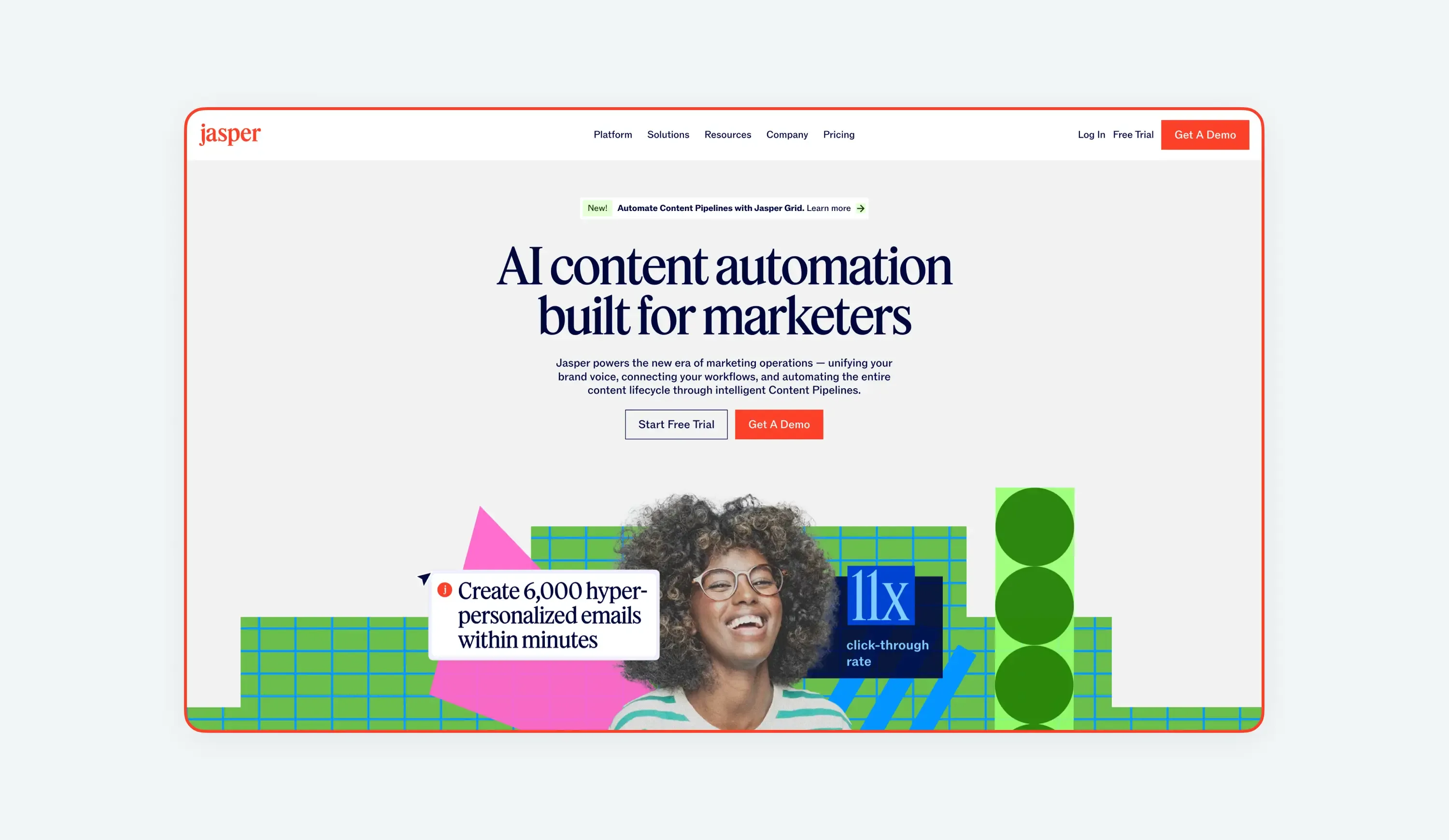
Source: Jasper AI
Jasper AI is a San Francisco-based AI-powered marketing platform that serves enterprise marketing teams with content creation and workflow automation.
In 2024, Jasper launched an AI App Library containing 80+ purpose-built marketing applications spanning different marketing roles, plus custom AI apps for enterprise-specific challenges, and end-to-end workflow automation that integrates directly with CRM data.
Measurable results shared on PR Newswire:
Enterprise revenue doubled year-over-year (100% YoY growth)
10 consecutive quarters of sales teams exceeding quota
Expanded to 850+ enterprise customers
Now serves nearly 20% of Fortune 500 companies including Prudential, Ulta Beauty, and Wayfair
Built a 125,000-member marketing AI community
Jasper's internal marketing team published a case study showing their own AI-powered account-based marketing campaign achieved 20x ROI, an 11x increase in email click-through rate, and a 4x increase in email response rate.
Calendly
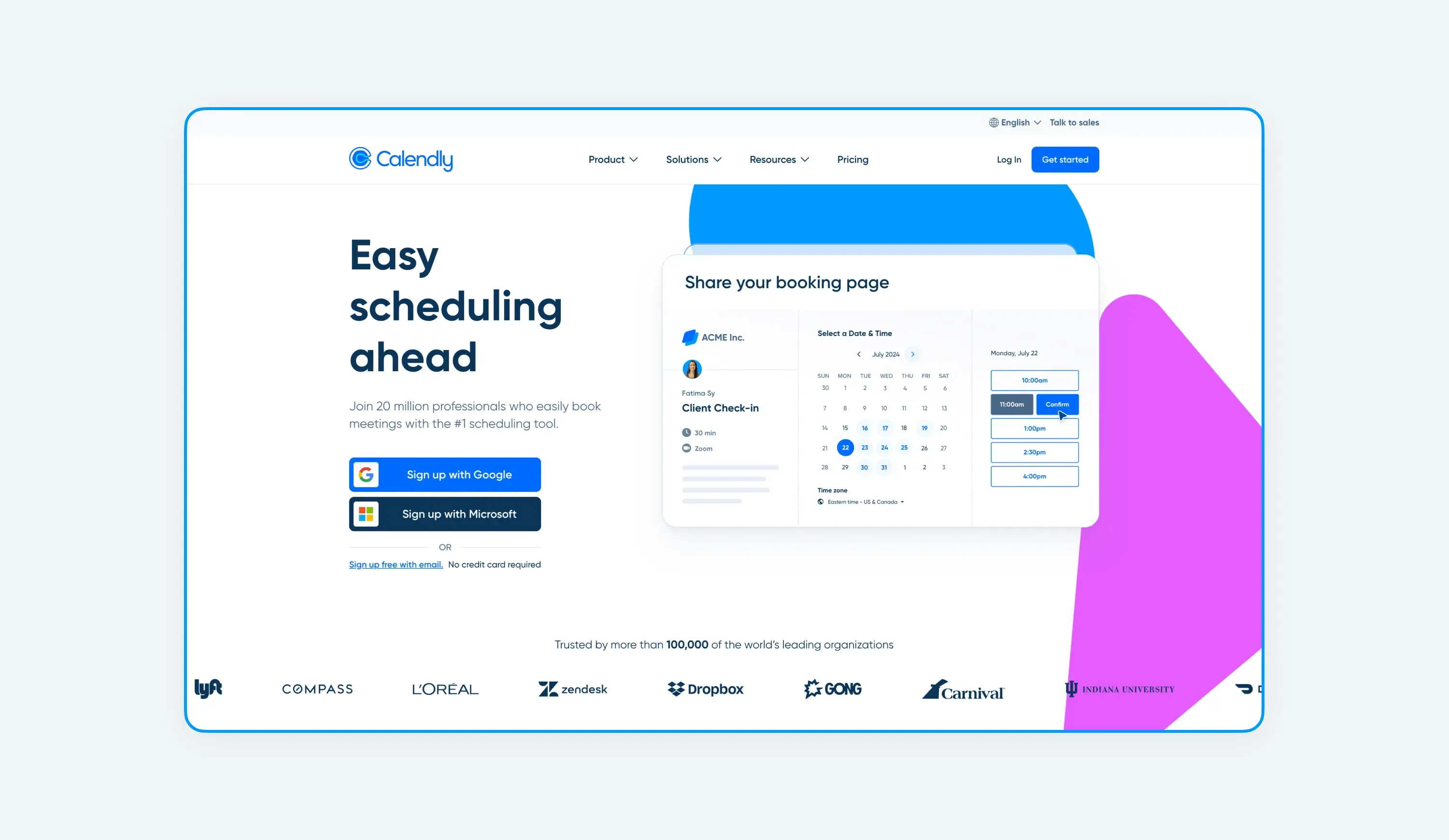
Source: Calendly
Calendly is an Atlanta-based scheduling automation platform. The company represents one of the most capital-efficient SaaS businesses in history, achieving $60M ARR while raising only $550K (a 109x ARR-to-funding multiple).
Calendly pioneered a hybrid PLG strategy combining a freemium entry point with viral growth loops: every scheduling link recipient sees Calendly branding, creating organic acquisition. The company has strategically expanded upmarket while maintaining its self-serve foundation, with a 90/10 revenue split between PLG and sales-assisted enterprise deals.
Measurable results shared on Calendly press release:
61% year-over-year increase in enterprise adoption
400% year-over-year growth in customers spending over $50,000 annually
86% of Fortune 500 companies now using the platform
14 of the top 15 Fortune 500 financial companies as customers
Customer base expanded to 100,000+ organizations
HackerOne, a Calendly customer, reported connecting with 88% more customers year-over-year and saving 73 business days on scheduling logistics.
Conclusion
The SaaS technology trends shaping 2026 (AI integration, vertical specialization, API-first architecture, security-first design) represent fundamental shifts in how successful products are built. Companies that embed AI into core workflows, adopt usage-based pricing, and build modular architectures will adapt faster than competitors running on rigid systems. The challenge is executing on these trends wisely, without derailing your current roadmap.
These decisions require experience navigating real-world trade-offs. Low-code accelerates some development but creates debt in the wrong contexts. Edge computing improves performance when implemented correctly. Security must be architectural, not cosmetic.
Whether you need to modernize legacy systems, hire SaaS developers with AI-native expertise, or chart a technical roadmap for innovation and stability — the right partner makes the difference. At Brights, we help SaaS teams turn strategy into working products. If you're ready to explore how these trends apply to your challenges, let's talk.
FAQ.
Low-code/no-code platforms drive SaaS transformation by enabling non-technical teams to build internal tools, dashboards, and workflow automation without engineering bottlenecks. They work best for standard business logic but can't replace custom development for complex algorithms or high-performance features. The strategic approach: use low-code for operational needs while reserving engineering talent for differentiated product capabilities.


