How Artificial Intelligence is Revolutionizing SaaS Products

AI-powered SaaS products are growing faster than their competitors — and that's not hype, it's data. Companies pursuing AI in SaaS, embedding the technology deeply into their core product experience, are outperforming across every revenue tier. According to 2025 SaaS benchmarks report by High Alpha, the gap is the most dramatic among businesses in the $1-5 million ARR range, where AI differentiation drives 70% faster growth.
For SaaS founders and product teams, this creates both an opportunity and a decision point: how do you build AI features that actually accelerate growth, not just check a box or drain resources?
Most teams struggle to identify which AI-driven SaaS features will improve retention or operations, versus which ones just demo well. Factor in integration complexity, security risks, and unclear ROI, and it's no surprise that many SaaS companies either hesitate or burn budget.
We’ve written this guide to help you cut through the noise and show you how AI is transforming SaaS products through real use cases, clear business outcomes, and technical considerations. As SaaS application development consultants, Brights has partnered with SaaS companies like Showcase and Chimney, to implement innovative strategies that allow teams to move from uncertainty to competitive advantage.
Key takeaways
AI-native SaaS companies grow much faster than competitors, with the performance gap most dramatic in the $1-5M ARR range, where AI differentiation drives 70% faster growth.
The highest-impact AI use cases include automated support, sales intelligence, personalized marketing, and productivity optimization that eliminates repetitive work.
Managed AI services like OpenAI API or Google Vertex AI let existing engineers integrate AI through APIs without hiring specialists, avoiding the cost and complexity of building models from scratch.
AI challenges like data privacy, model bias, and integration complexity are solvable with phased rollouts, human-in-the-loop workflows, and governance frameworks.
The winning approach isn't using AI everywhere, but identifying where it creates the most leverage for your product and scaling only what delivers measurable results.
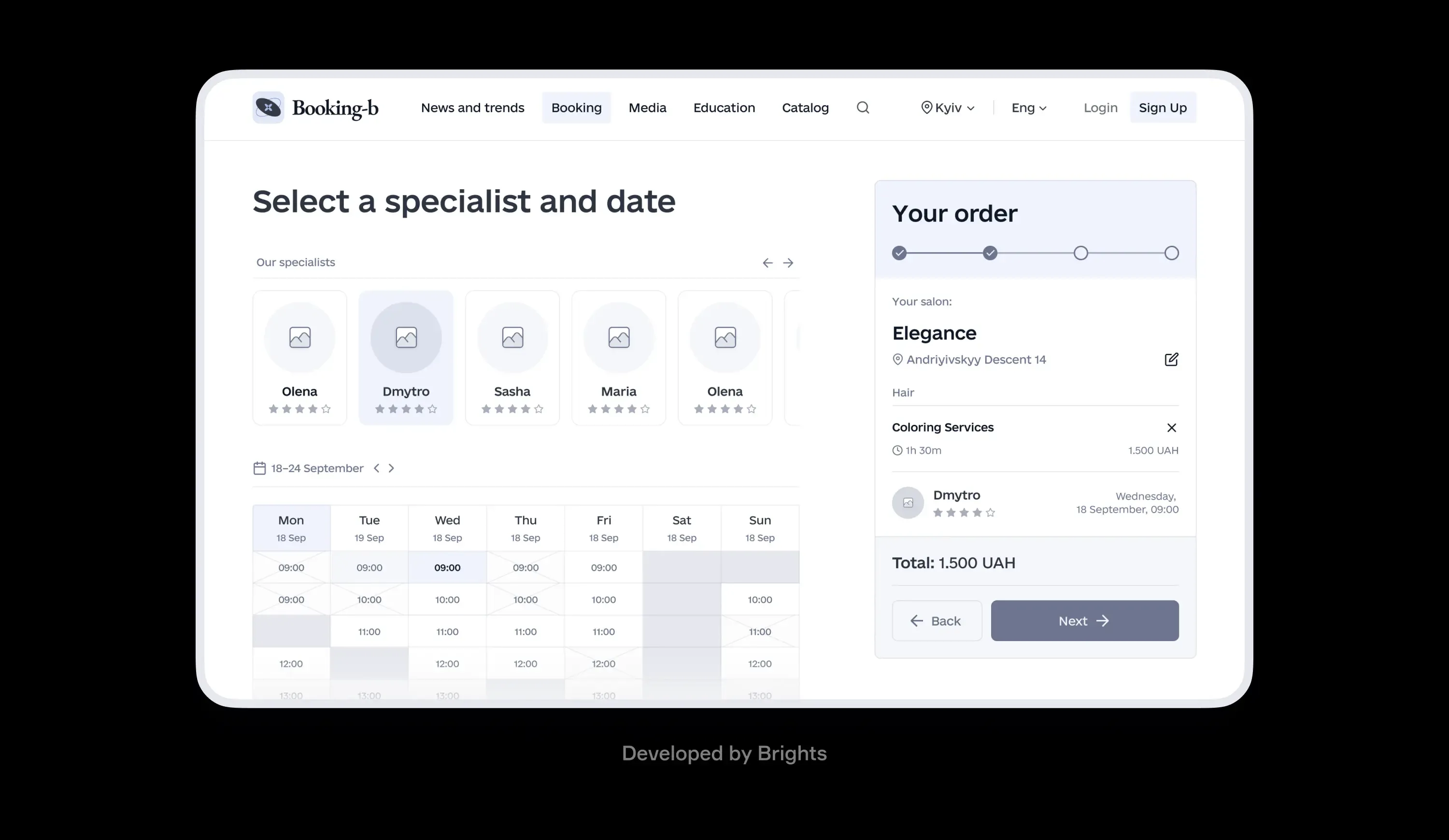
SaaS booking app developed by Brights
What is AI in SaaS, and why does it matter?
Artificial intelligence in SaaS refers to technologies like machine learning, natural language processing, predictive analytics, and automation capabilities built directly into software products. Instead of treating AI as a separate tool, modern SaaS platforms embed it into core workflows. Think chatbots that understand customer intent, recommendation engines that personalize user experiences, or analytics tools that forecast churn.
The impact shows up in three areas that matter most to product teams: performance, experience, and decisions. AI automates repetitive tasks that used to require human intervention, improves customer satisfaction through personalization and faster resolution times, and surfaces insights that help teams make better strategic calls.
The business case is increasingly clear. Companies investing in generative AI are seeing an average ROI of 3.7x, with top performers achieving returns exceeding 10x.
At the same time, Gartner predicts that by 2026, more than 80% of enterprises will have deployed GenAI-enabled applications in production, up from less than 5% in 2023. For SaaS companies, this isn't optional anymore — it's table stakes for staying competitive.
What business value does AI create for SaaS companies?
AI delivers measurable improvements across four areas that directly impact your bottom line: how you serve customers, how efficiently you operate, how well you retain users, and how accurately you forecast growth.
Personalization at scale: AI analyzes user behavior to tailor experiences, content, and recommendations to individual needs. This isn't just about showing relevant features, but about adapting the entire product experience based on how someone actually uses your software.
Predictive insights: Machine learning in SaaS platforms helps identify patterns humans miss. They flag customers at risk of churning before they cancel, predict which leads are most likely to convert, and forecast resource needs before capacity becomes an issue.
Workflow automation: AI workflow automation for SaaS handles repetitive tasks that used to require human judgment: routing support tickets, generating reports, classifying data, and managing approvals. This frees your team to focus on work that actually requires human expertise.
Operational efficiency: By automating routine processes, AI reduces operational costs while improving speed and accuracy. The result is leaner teams that accomplish more.
The most impactful AI use cases in SaaS
Successful AI implementations typically solve specific, high-frequency problems that directly impact revenue, retention, or operational efficiency. Here are the examples of AI in SaaS products and the measurable returns they are bringing.
Customer support
AI-powered support goes beyond simple chatbots. Modern implementations use natural language processing to understand context, pull from multiple knowledge sources, and resolve issues end-to-end without human escalation. This matters because support costs scale linearly with customer growth, and AI breaks that pattern.
Intercom's Fin, AI agent in customer service, demonstrates this at scale. The product achieves a 66% resolution rate by accessing help documentation, past conversations, and product data simultaneously. For Lightspeed Commerce, this means 45-65% of support volume gets handled automatically, while human agents using AI copilot features close 31% more tickets daily. The business impact: lower support costs, faster resolution times, and higher customer satisfaction scores.
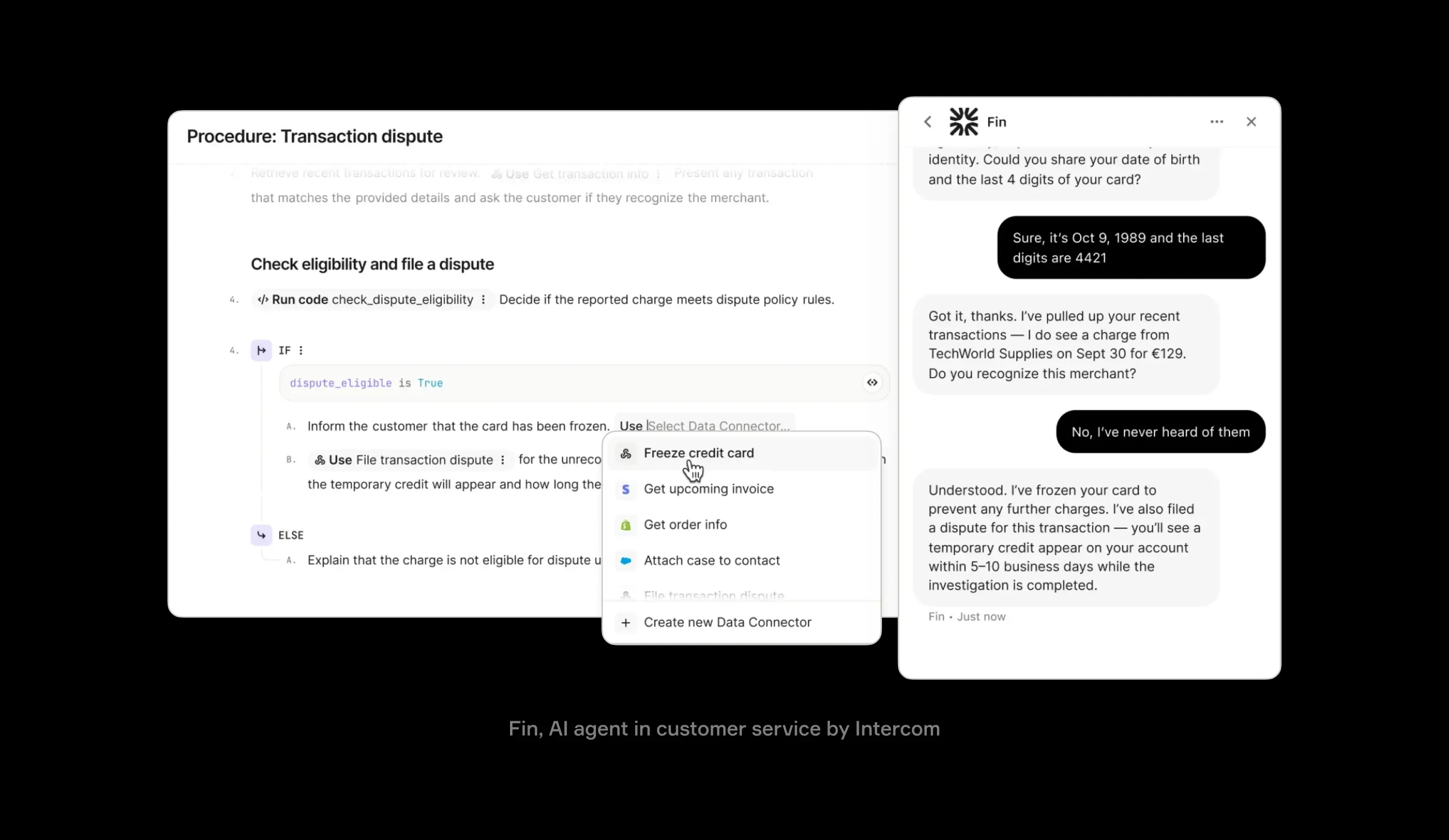
Source: Fin
Sales intelligence
AI transforms sales from guesswork to data-driven execution. Instead of manually researching prospects and crafting outreach, AI analyzes buying signals, generates personalized messaging, and identifies the optimal moment to engage. This directly impacts pipeline velocity and conversion rates.
ZoomInfo Copilot reports their users capture 25% more pipeline by letting AI handle prospecting research and email personalization. Sales reps save 8 hours per week on administrative tasks and see 62% higher email response rates because the AI tailors messaging based on prospect behavior and company signals.
Marketing and personalization
One of the most impactful AI use cases in SaaS is using the technology for personalization that would be impossible to execute manually. It analyzes user behavior across touchpoints, predicts content preferences, and adapts messaging in real-time. This demonstrates how AI improves SaaS user experience, translating directly to higher conversion rates and better customer engagement.
HubSpot's AI features increased email conversion rates by 82% through behavioral personalization. The system analyzes which content resonates with specific segments and automatically adjusts messaging. Sales teams also saved 30% of time spent in discovery calls and cut follow-up time by 20%.
Productivity optimization
AI embedded in daily tools creates efficiency improvements across entire teams. Rather than automating one isolated process, it improves how people write, communicate, and collaborate, delivering benefits that compound over time.
Grammarly's business platform saves employees 19 working days annually by improving communication quality and speed. That translates to $5,000+ per employee in productivity value and 17x ROI. Their customer ModMed achieved 28x ROI, while Databricks reported 70% improvement in written communications quality and 50% reduction in editing time.
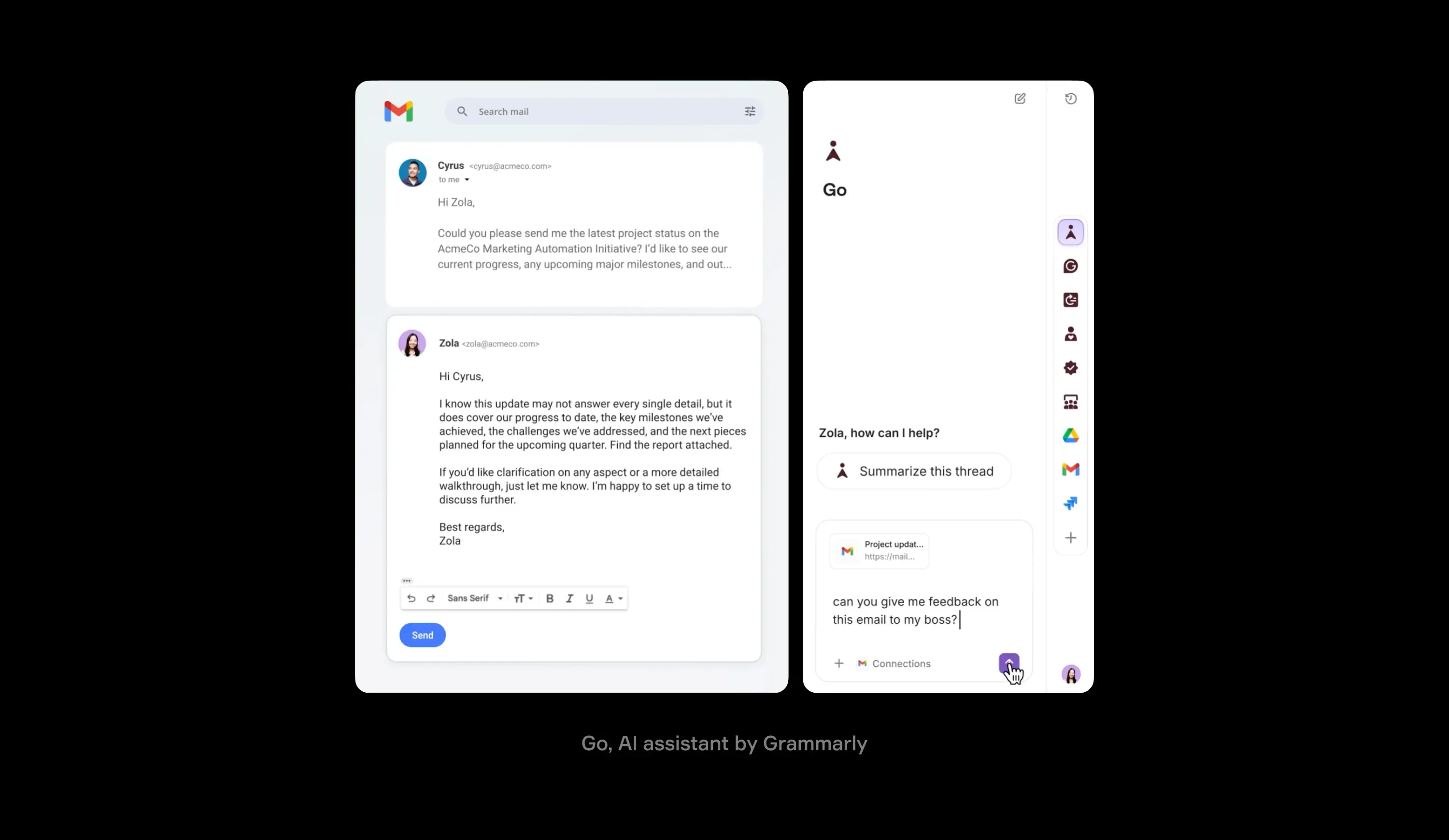
Source: Grammarly
So, what’s the common pattern across these SaaS AI use cases? Artificial intelligence works best when it eliminates repetitive cognitive work, provides intelligence humans can't generate at scale, and integrates seamlessly into existing workflows. Companies aren't replacing humans, but rather removing the tasks that slow humans down.
What does the future hold for AI in SaaS?

The trajectory is clear: AI is confidently moving from automation to autonomy. Here are the AI trends in SaaS industry to be aware of for the years to come:
Agentic AI. Gartner forecasts that by 2028, 33% of enterprise software will incorporate agentic AI — systems that make decisions and take actions without constant human oversight. These aren't chatbots waiting for prompts but complex AI agents that monitor data, detect opportunities, and execute tasks independently.
Multimodal AI: By 2030, Gartner predicts 80% of enterprise software will process text, image, audio, and video together rather than treating them as separate inputs. For SaaS products, this means rethinking SaaS UX design best practices to create interfaces where users can upload a screenshot, ask a question verbally, and get a response that includes generated visuals, all in one interaction.
Vertical AI specialization: Vertical AI is already growing, with specialized products commanding premium pricing because they understand industry-specific workflows. A generic CRM with AI features can't compete with a vertical SaaS product that knows healthcare compliance requirements or construction project sequencing.
Security architecture. As AI becomes embedded in products, new vulnerabilities emerge: prompt injection attacks, model poisoning, and unauthorized data access through AI features. Products will need fine-grained access controls, runtime monitoring that understands AI context, and transparency about which AI models are processing customer data.
Ultimately, SaaS products that treat AI as a feature add-on will struggle against competitors who rebuild core workflows around what AI makes possible. The winners won't be those who use AI the most — they'll be those who use it where it creates the most leverage.
For more insights on the industry’s future, check out our article on the top SaaS trends for 2026.
Moving from AI strategy to implementation
AI in SaaS isn't a speculative, fleeting trend — it's delivering measurable results across support automation, sales intelligence, marketing personalization, and productivity optimization. The benefits of AI in SaaS are proven: faster resolution times, higher conversion rates, increased pipeline, and significant cost reductions.
The challenge lies in execution. Data privacy, integration complexity, skill gaps, the cost of building a SaaS product with AI features, and ROI uncertainty can slow teams down. The companies that succeed take a phased approach: they start with one high-impact workflow, measure results against defined metrics, and scale what works while killing what doesn't.
At Brights, our SaaS development consulting helps teams bridge the gap between knowing AI matters and actually shipping features that deliver ROI. We'll work with you to identify which AI capabilities fit your SaaS product roadmap, build implementations that integrate with your existing systems, and establish the frameworks your team needs to maintain and extend AI features over time.
FAQ.
AI automation in SaaS products delivers one of the fastest ROI. If it’s relevant, you can start with support ticket routing, churn prediction, or workflow automation that eliminates repetitive manual tasks. Managed AI services (OpenAI API, Google Vertex AI) are more cost-effective than building custom models, especially for early-stage implementation.


